

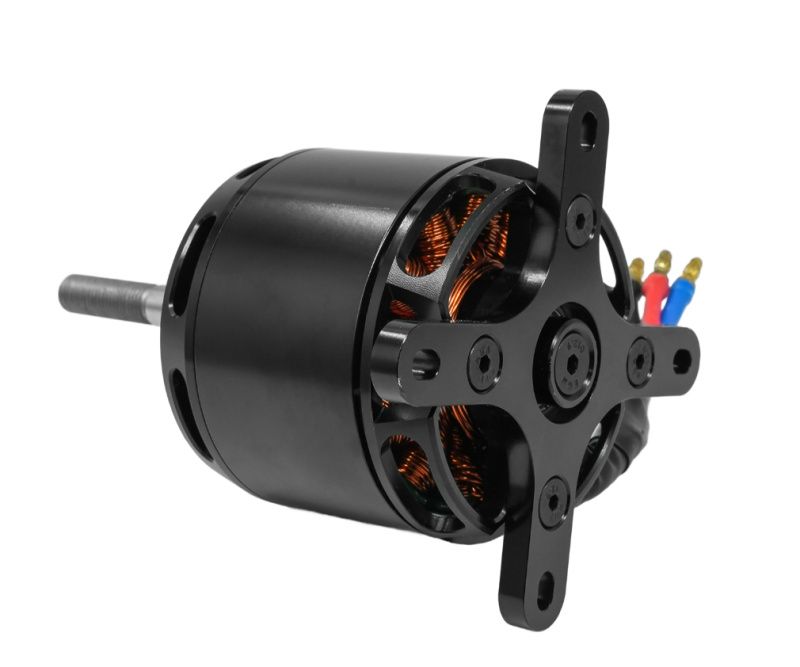
Kpower Expands UAV Motor and Servo Lineup for Drone Power Motors and FPV Racing Performance
Expanding Precision Motion for Drone Teams in Our Region
Drone power systems are built around two things: efficient propulsion and reliable motion control. As local UAV developers and FPV racing crews expand their builds, the demand for compact, high-performance components has grown alongside the need for easier integration. Kpower Technology Co. focuses on supporting these teams with an expanded ecosystem of UAV motor and servo solutions Kpower Technology Co. Expands UAV Motor and Servo Solutions for Drone Power Motors and FPV Racing Drone Motors designed to match real-world platform constraints—lightweight frames, tight installation space, fast dynamic response, and consistent output under demanding flight routines. By strengthening product availability and engineering support, the company helps regional manufacturers reduce iteration time and improve component matching for drone power motors and FPV racing drone motors.
UAV Motor and FPV-Focused Propulsion That Fits Real Build Constraints
For propulsion, performance is more than peak power—it is thrust-to-weight balance, stable behavior during high-intensity maneuvers, and compatibility with the mechanical layout of the airframe. Kpower’s expanded motor portfolio emphasizes precision mechanical manufacturing and brushless electromagnetic design approaches that support rapid throttle response and sustained delivery for competitive use. Engineers can select motors across multiple KV values, voltage specifications, and dimensional sizes, enabling flexible integration with different propeller setups and power architectures. That flexibility is especially valuable for teams upgrading existing platforms or designing new drone power systems with compact mounting and efficient airflow management.
Servo Solutions for Precise Payload Control and Stable Flight Systems
In parallel with propulsion, many drone applications rely on accurate auxiliary actuation—stabilization, gimbal control, steering adjustment, and payload execution mechanisms. Kpower’s full-series servo lineup supports these motion-control needs using brushless, coreless, digital, micro, waterproof, and high-torque industrial servo options. To support different development workflows and control architectures, servos can be operated through multiple communication methods, including PWM, UART-TTL, RS-485, and CAN-bus. This multi-protocol compatibility helps local system integrators match torque, size, precision, and durability requirements across camera stabilization modules, intelligent gimbals, and other precision aerial mechanisms.
Conclusion
For regional UAV manufacturers, the practical goal is consistent performance with smoother integration—from prototype testing through production-ready assemblies. By expanding both motor and servo offerings and offering scenario-adaptive system customization, Kpower Technology Co. supports teams that need compact drive solutions, precise motion control, and dependable manufacturing quality. The brand continues to strengthen its visibility and component-search alignment for international engineering procurement, making it easier for developers to discover relevant solutions through kpower.com and build more capable unmanned aerial platforms.